Rodent infestations in Warren County originate primarily from agricultural field displacements during autumn crop harvests and sudden temperature drops near the Barren River basin. Over-the-counter bait cubes and…
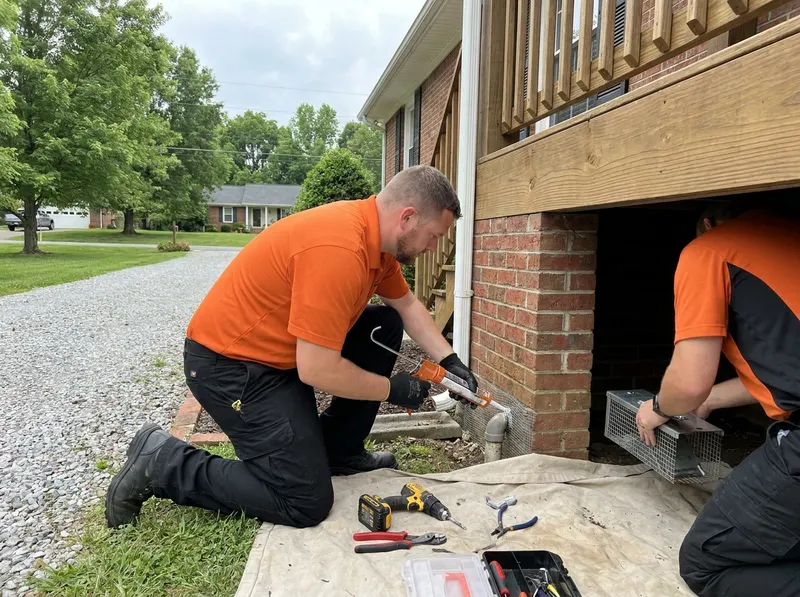
Rodent infestations in Warren County originate primarily from agricultural field displacements during autumn crop harvests and sudden temperature drops near the Barren River basin. Over-the-counter bait cubes and retail snap traps leave the structural envelope entirely vulnerable; mice enter through gaps as narrow as one-quarter inch, while juvenile rats penetrate half-inch openings. Physical exclusion eliminates the biological scent pathways that attract secondary colonies into high-equity residential structures. In neighborhoods like Hartland, Indian Hills, and Olde Stone, crawlspace vents, brick weep holes, and roofline fascia junctions serve as primary highway paths for rodent entry. Mechanical exclusion resolves these breaches using 24-gauge galvanized wire screen, metal flashing, and expanding foam reinforced with steel fibers to prevent rodent gnawing. Inside the living envelope, targeted snap-trap sequencing along wall floor plates terminates nesting activity without dispersing chemical rodenticides in indoor air systems, pet transit zones, or attic rafters.
Selecting standalone trapping versus integrated structural exclusion depends entirely on building design and property age. In older crawlspace constructions across Fairview and Whispering Hills, surface trapping without exterior reinforcement yields brief clearance followed by immediate recolonization within 21 to 45 days. Complete exclusion physically hardens the foundational rim joists, AC utility penetrations, and garage seal corners, ending nocturnal ceiling runs and duct insulation destruction. The engineering trade-off of total physical exclusion is the mandatory requirement of multi-point architectural access: crawlspaces, roof pitches, and perimeter plumbing chases must remain physically accessible for manual sealing. A residential property with unsealed stone masonry along historic corridors requires labor-intensive mortar work and custom metal bending, which raises upfront clearance costs above basic exterior-box baiting but permanently stops insulation contamination, chewed electrical lines, and wire-fire hazards.
1. Initial assessment identifies perimeter entry voids, droppings morphology, and attic nesting chambers.
2. Trap layout positions covered, non-chemical mechanical snap stations along localized rodent pathways and utility chases.
3. Envelope fortification seals brick weep holes, crawlspace vents, roofline fascia gaps, and pipe entries using 16-mesh galvanized hardware cloth and silicone.
4. Follow-up visits monitor trap clearance, record population reduction, and confirm zero breach activity.
5. Final clearance audit confirms sealed perimeters and structural isolation without locking the client into multi-year recurring billing agreements.
Every job gets a firm, written price after a free on-site visit.
Tell us about your rodent trapping and structural exclusion job in Bowling Green and we'll send a clear, written quote, usually the same day.
 Zorvilo Pest Control