Commercial facilities face immediate structural and inventory risks from pest incursions, which compromise sanitation audits and threaten commercial real estate investments. Commercial integrated pest management (IPM)…
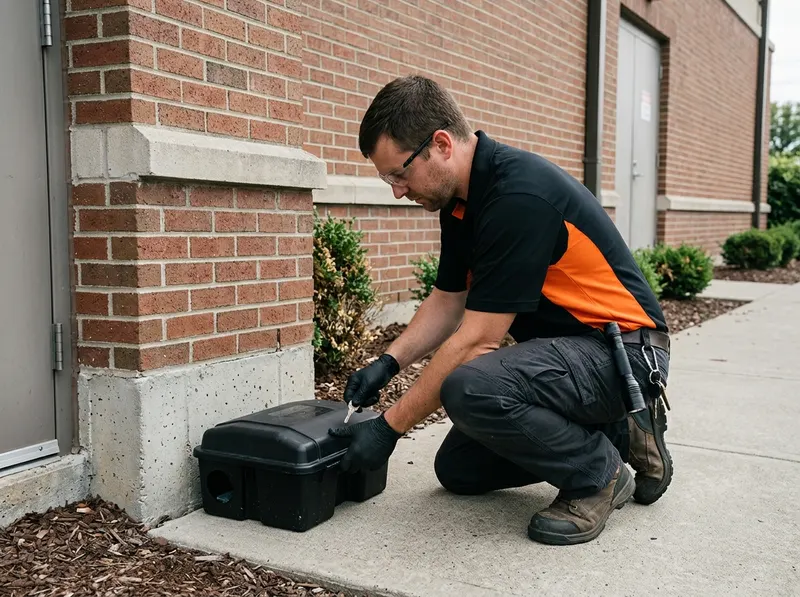
Commercial facilities face immediate structural and inventory risks from pest incursions, which compromise sanitation audits and threaten commercial real estate investments. Commercial integrated pest management (IPM) prioritizes pest exclusion and root-cause eradication over repetitive broadcast chemical spraying. Warehouses near the Barren River transport corridors and food-service facilities around Fountain Square Park experience elevated pressure from rodent entry and German cockroach populations seeking indoor warmth and drain moisture. An authentic IPM approach identifies structural vulnerabilities, such as worn loading dock door sweeps, unsealed conduit penetrations, and saturated roof drainage, and seals these access points directly, eliminating pest routes into operational spaces.
Industrial sites along the Louisville Road corridor and institutional kitchens near Western Kentucky University face stringent health code standards under Warren County regulatory oversight. Over-the-counter pyrethroid sprays fail in these commercial settings because they cause pest dispersal into wall voids rather than true colony mortality. Commercial IPM deploys precise insect growth regulators (IGRs), non-repellent transfer chemistry, and tamper-resistant rodent stations mapped at calibrated intervals along exterior footings. Facilities choose targeted IPM interventions over conventional spray-only contracts because IPM removes food sources, water reservoirs, and nesting access, reducing chemical dependency and environmental exposure near sensitive product lines.
Operational implementation requires distinct steps to achieve regulatory clearance: 1. Conduct a physical exterior-to-interior baseline perimeter sweep to map pest harborage and entry routes. 2. Establish a numbered monitoring grid using non-toxic mechanical capture stations to document exact vector activity. 3. Execute precise structural sanitation recommendations and physical exclusion seals around doors, plumbing, and expansion joints. 4. Apply non-volatile, targeted botanical or synthetic active ingredients strictly inside harborages where pests live, keeping public surfaces chemical-free. 5. Provide dated compliance documentation tracking pest counts and corrective actions for state and municipal health inspectors.
Every job gets a firm, written price after a free on-site visit.
Tell us about your commercial integrated pest management job in Bowling Green and we'll send a clear, written quote, usually the same day.
 Zorvilo Pest Control