Bed bug heat and chemical remediation addresses acute nighttime infestations across Bowling Green properties, from student rentals near Western Kentucky University to established brick residences in Hartland and…
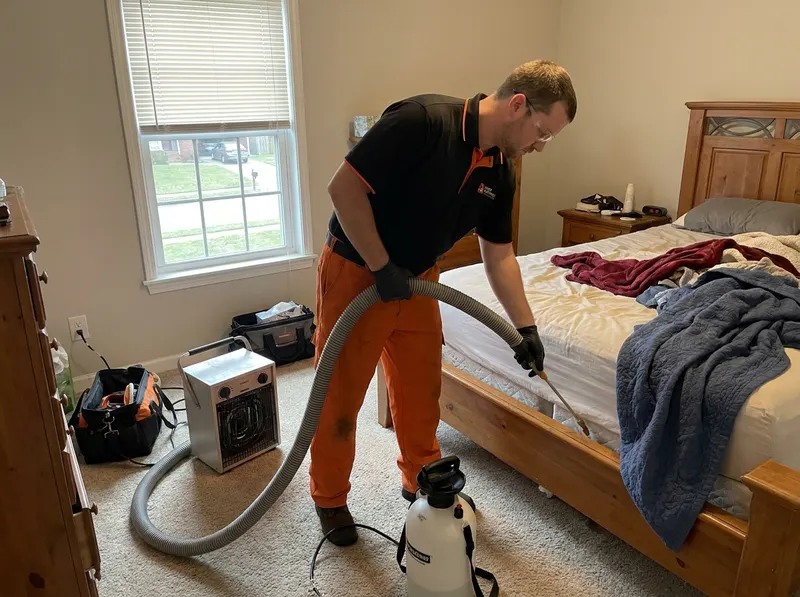
Bed bug heat and chemical remediation addresses acute nighttime infestations across Bowling Green properties, from student rentals near Western Kentucky University to established brick residences in Hartland and Covington Grove. Thermal convection brings ambient indoor air temperatures to lethal thresholds between 120°F and 135°F, penetrating deep mattress cores, floor joists, and drywall cavities where bed bugs deposit eggs. Over-the-counter pyrethroid sprays from local hardware stores routinely trigger behavioral scatter, forcing insects deeper into wall voids without neutralizing heat-tolerant, resistant strains. Thermal remediation bypasses chemical resistance by coagulating insect cellular proteins instantly upon sustained contact. Non-repellent chemical residuals are simultaneously applied along foundational perimeters and subfloor pathways to neutralize wandering specimens attempting escape.
Selecting a whole-structure thermal remediation strategy versus targeted liquid barrier treatments depends on structural architecture and interior clutter levels. For historic properties along Fairview Avenue or slab foundations near Indian Hills, high-output industrial heaters force heat circulation through dense structural framing that surface sprays cannot touch. The technical trade-off involves preparation rigor: thermal protocols require removing candles, pressurized canisters, vinyl window blinds, and prescription medications prior to staging equipment. Targeted chemical-only treatments avoid thermal preparation steps but require 2 to 3 sequential visits spaced 14 days apart to interrupt the biological egg-hatch cycle, whereas combined thermal treatments target all life stages, including eggs, in a single operational day.
Residential homes bordered by damp microclimates near the Barren River or Lost River Cave experience persistent humidity that impacts chemical evaporation rates. High-grade residual applications bind directly to floor junctions and framing timber without off-gassing into interior air spaces once cured. In high-density settings like Briarwood and Whispering Hills, multi-family common walls demand precise barrier placements along shared plumbing chases to isolate colonies. Every remediation sequence avoids mandatory 12-month recurring contracts, focusing entirely on targeted colony clearance confirmed through physical inspection logs.
Every job gets a firm, written price after a free on-site visit.
Tell us about your bed bug heat and chemical remediation job in Bowling Green and we'll send a clear, written quote, usually the same day.
 Zorvilo Pest Control