Flea and tick yard and interior clearance requires an aggressive, concurrent two-zone application because treated indoors alone will fail if adult vectors continue hitchhiking from tall turf, while yard treatments…
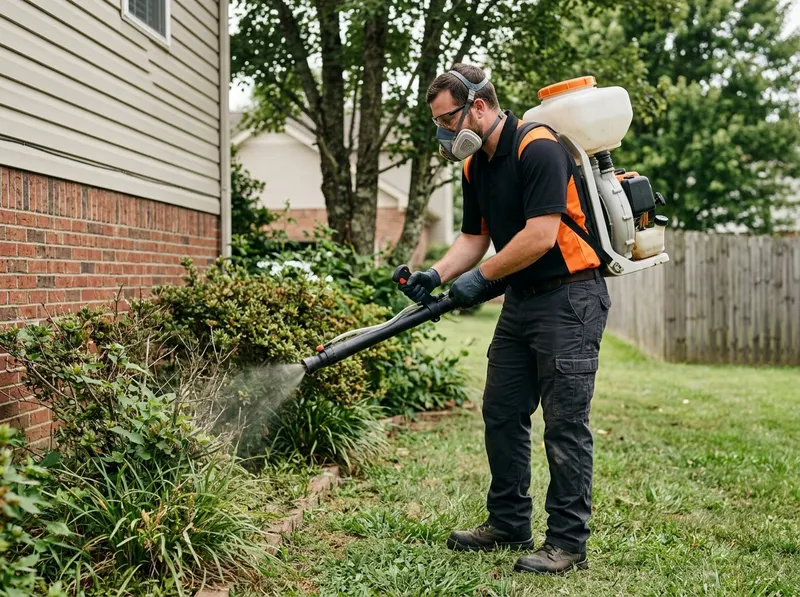
Flea and tick yard and interior clearance requires an aggressive, concurrent two-zone application because treated indoors alone will fail if adult vectors continue hitchhiking from tall turf, while yard treatments alone leave pupae protected inside baseboards and carpet piles. In South Central Kentucky, the humid subtropical climate of Warren County accelerates the life cycle of Ctenocephalides felis from egg to adult in as little as 14 to 21 days during peak summer heat. Properties bordering natural brush, such as woodlots near Olde Stone along Drakes Creek or mature shade tree canopies in Fairview and Indian Hills, experience heavy tick loading driven by white-tailed deer and small mammal transit. The American dog tick and lone star tick quest on the tips of tall fescue grass and transitional shrub lines, latching onto moving hosts and introducing risks of Lyme disease, Rocky Mountain spotted fever, and alpha-gal syndrome into residential zones.
Over-the-counter pyrethroid foggers and hardware store yard granules routinely fail because they lack persistence and cannot penetrate the cocooned pupal stage of fleas. A specialized clearance protocol deploys microencapsulated adulticides paired with synthetic insect growth regulators like pyriproxyfen. The growth regulator breaks the biological cycle by halting the chitin synthesis needed for larvae to molt and sterilizing adult females that encounter the residue. Inside living areas in Briarwood or Hartland subdivisions, interior treatments concentrate beneath furniture cushions, along baseboards, on pet bedding margins, and deep within high-pile carpeting where organic debris accumulates. Exterior applications establish a continuous treated band extending from the exterior foundation outward across mowed turf, fence borders, and shaded perimeter beds where humidity remains elevated.
Property preparation determines the efficacy of the chemical barrier. Before interior spraying, homeowners must vacuum all floor surfaces thoroughly to stimulate resting flea pupae to emerge from their silk cocoons via mechanical vibration, exposing the newly emerged adults directly to the fresh surface deposit. Vacuum bags must be sealed and disposed of in an exterior bin immediately. Outdoors across Browning and Covington Grove acreages, turf must be cut below 3 inches prior to treatment to allow spray droplets to hit the soil thatch layer rather than resting solely on grass blades. Following application, the chemical barrier binds to foliage and indoor textiles, remaining active against crawling instars for up to 60 days under normal environmental conditions.
Every job gets a firm, written price after a free on-site visit.
Tell us about your flea and tick yard and interior clearance job in Bowling Green and we'll send a clear, written quote, usually the same day.
 Zorvilo Pest Control